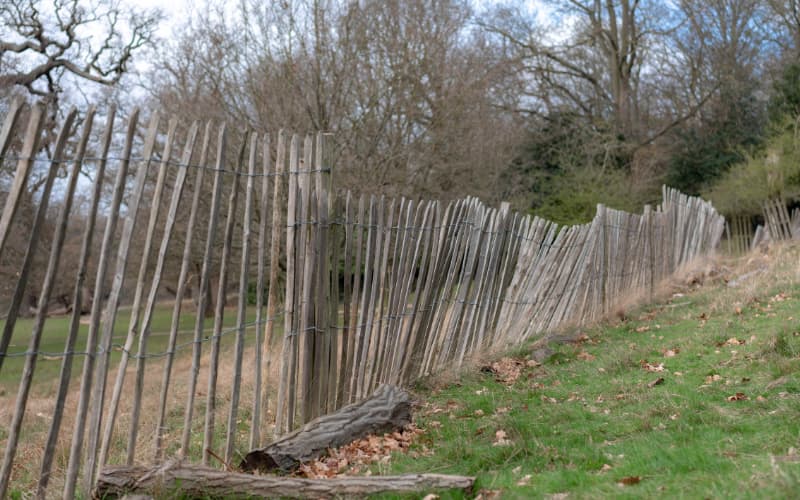
Why Does Stock Fencing Sag and What Can Be Done About It?
Stock fencing is designed to create a practical, secure and durable boundary, particularly where larger areas of land need to be enclosed. However, one of the most noticeable problems that can develop over time is sagging. Wire mesh that was originally straight and properly tensioned may begin to droop between posts, become loose near the ground or lose its overall shape. Although this can sometimes be caused by ordinary ageing, persistent sagging can also indicate weaknesses in the way the fence is supported or tensioned.
At Fast Fix Fencing Wimblington, we provide professional fencing services throughout Wimblington, Cambridge, including the installation and repair of stock fencing. Understanding why a fence has started sagging is the first step towards determining whether it can be re-tensioned, locally repaired or requires more substantial attention.
Why Correct Tension Is Essential for Stock Fencing
Unlike solid fence panels, stock fencing relies on tension throughout the wire mesh to maintain its shape and effectiveness.
When installed correctly, the mesh is stretched between suitable supporting posts so that it remains firm and consistent along the fence line. If that tension is lost, the wire can begin to sag.
Good stock fencing therefore depends on the complete system working together, including:
- Strong end and corner posts
- Correctly positioned intermediate posts
- Suitable supports and straining arrangements
- Secure fixings
- Proper wire tension
- Appropriate installation for the ground conditions
A weakness in any of these areas can affect the rest of the fence.
Weak End Posts Can Cause the Whole Fence to Lose Tension
The end posts carry significant forces because the fencing is tensioned against them.
If an end post begins leaning or moving within the ground, the wire may gradually lose tension across a much longer section of fencing.
Simply tightening the mesh without correcting the unstable post may therefore provide only a temporary improvement.
A professional repair should establish whether the support structure remains strong enough before attempting to restore tension.
Corner Posts Are Particularly Important
Changes in direction place additional demands on stock fencing.
Corner posts need to withstand the pull created by tensioned wire approaching from different directions. If a corner post moves, several sections of fencing can potentially be affected.
Where sagging appears close to a change in the fence line, the condition of the corner support should be checked carefully.
Incorrect Initial Tension Can Lead to Early Sagging
Stock fencing needs to be tensioned correctly during installation.
If the mesh is installed too loosely, visible sagging may develop relatively quickly. The fence can then become less effective at maintaining a clearly defined and secure boundary.
Correct tensioning requires experience because the aim is not simply to pull the wire as tightly as possible. The fencing needs to be installed in a controlled manner that suits the material, posts and overall layout.
Ground Movement Can Affect Fence Posts
Fence posts depend on the surrounding ground for stability.
Changes in ground conditions can sometimes cause posts to move gradually. Once a post shifts, the geometry of the fence changes and tension may be lost.
Signs of post movement can include:
- Leaning posts
- Loose posts
- Changes in fence alignment
- Sagging concentrated around one area
- Sections that move excessively when disturbed
Where post movement is responsible, restoring the support should normally form part of the repair.
Long Fence Runs Need Proper Support
Long stretches of stock fencing place greater demands on the installation.
Without suitable support and correct straining arrangements, maintaining consistent tension across the complete run can become difficult.
A professional installation considers the length and layout of the boundary before deciding where stronger supporting points are required.
This helps prevent one weak area from affecting a much larger section.
Damage Can Cause Localised Sagging
Not every sagging fence has a problem with its complete installation.
Localised damage may occur if the wire has been:
- Bent
- Stretched
- Cut
- Pulled away from its fixings
- Damaged by repeated pressure
- Distorted by an impact
In these circumstances, the surrounding fence may remain correctly tensioned while only one section requires attention.
The extent of the damage should be assessed before deciding whether repair or replacement of that section is most appropriate.
Loose Fixings Can Allow the Mesh to Move
Stock fencing needs to remain correctly attached to its supporting posts.
If fixings become loose or fail, the mesh can move away from its intended position even when the posts themselves remain stable.
A fencing inspection should therefore consider both the main support structure and the smaller components holding the wire in place.
Replacing or correcting suitable fixings may form part of restoring a localised section.
Can Sagging Stock Fencing Simply Be Re-Tensioned?
In some situations, yes.
If the posts remain strong, the wire is in serviceable condition and the problem is primarily a loss of tension, professional re-tensioning may restore the fence.
However, tightening the wire without first understanding why it became loose can overlook the real problem.
If an end post is moving, for example, re-tensioning against that unstable support is unlikely to produce a dependable result.
The cause of the sagging should always be addressed first.
When Might Posts Need Replacing?
Posts may need attention when they no longer provide sufficient support for the fencing.
A replacement may be appropriate where a post has become significantly unstable, damaged or deteriorated.
Once suitable support has been restored, the fencing can then be correctly positioned and tensioned.
This approach deals with the structural cause rather than attempting to disguise the resulting sag.
What If the Wire Mesh Is Badly Distorted?
Wire that has become severely stretched or damaged may not return neatly to its original shape.
In these cases, replacing the affected section may provide a better result than repeatedly attempting to tension distorted material.
This does not necessarily mean the complete fence needs replacing. Where adjoining sections and supporting posts remain in good condition, localised work may be sufficient.
Uneven Ground Requires Careful Installation
Stock fencing is often installed across land that is not perfectly level.
Changes in ground height can make maintaining a consistent lower fence line more challenging. If the mesh is not installed appropriately for these variations, gaps or loose sections can develop.
Professional installers take the contours of the ground into account so that the fencing follows the boundary effectively without unnecessary sagging.
Why Sagging Should Not Be Ignored
A small amount of looseness can gradually become more noticeable if the cause remains unresolved.
As tension reduces, the fencing may:
- Lose its neat appearance
- Become less effective as a boundary
- Develop larger gaps
- Place uneven forces on neighbouring supports
- Become increasingly difficult to maintain
Early attention can often prevent a localised problem from affecting a longer section of fencing.
Good Installation Helps Prevent Future Sagging
The most effective way to reduce sagging is to construct the stock fence correctly from the outset.
At Fast Fix Fencing Wimblington, we install stock fencing throughout Wimblington, Cambridge, with attention to the complete support and tensioning system.
This includes considering:
- Boundary layout
- Ground conditions
- Post stability
- Changes in direction
- Length of fencing runs
- Wire positioning
- Appropriate tensioning
Careful installation helps create a boundary that remains stable and properly aligned over the longer term.
Professional Assessment Identifies What Actually Needs Repairing
A sagging fence does not automatically need complete replacement.
In some cases, re-tensioning may be enough. Elsewhere, one unstable post, damaged section of wire or failed fixing may be responsible.
A professional assessment helps distinguish between these possibilities so that sound parts of the existing fence do not need to be disturbed unnecessarily.
At Fast Fix Fencing Wimblington, our approach is to identify why the fencing has lost its shape before recommending the appropriate remedial work.
Conclusion
Stock fencing usually begins to sag when it loses the tension or structural support required to keep the wire mesh correctly positioned. Loose or moving posts, inadequate initial tension, damaged mesh, failed fixings and challenging ground conditions can all contribute to the problem.
The right solution depends on the cause. Some fences can be professionally re-tensioned, while others may require stronger supports or replacement of a damaged section. Addressing the underlying weakness is more effective than simply tightening visibly loose wire.
If your stock fencing in Wimblington, Cambridge, has started to sag, lean or become loose, Fast Fix Fencing Wimblington can assess the condition of the complete fence and recommend an appropriate solution. Contact our team to discuss professional stock fencing repairs or installation designed to provide a strong, practical and dependable boundary.
Call us on: 01354 707 488
Click here to find out more about Fast Fix Fencing Wimblington
Click here to complete our contact form and see how we can help with your fencing needs.